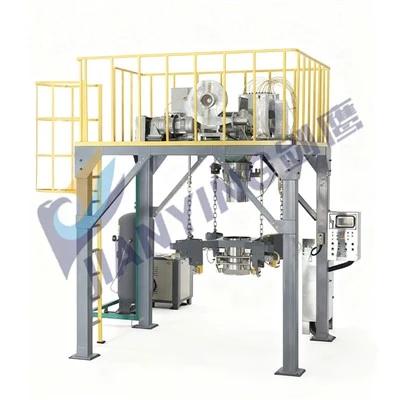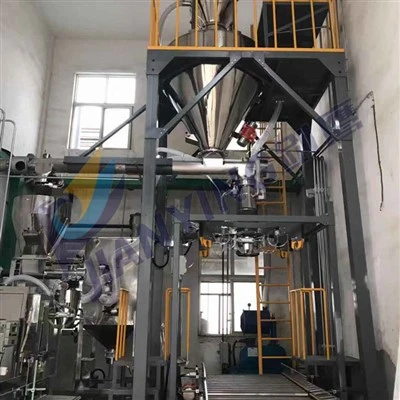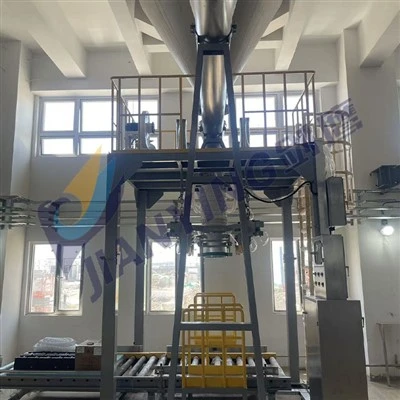

As an automatic bag filling machine supplier, I get asked this question more than any other: "How long will my bag filling machine actually last?" It's not a surprise-when you're investing in equipment that keeps your production line running, you want to know it'll pay off for years, not just months. Over the last 12 years working with hundreds of manufacturers across food, chemical, pharmaceutical, and agricultural sectors, I've seen machines that still run like new after 15+ years, and others that need major repairs after just 5. The difference isn't usually the brand or price tag-it's a mix of build quality, how you use it, and how well you maintain it. Today, I'm breaking down what really determines an automatic bag filling machine's lifespan, what to watch for, and how to get the most out of your investment.
First, let's talk about the average baseline lifespan. For most standard automatic bag filling machines-including models like the Fully Automatic Powder Packaging Machine we build for fine, flowable goods, or the Fully Automatic Granule Packaging Machine we design for dry, chunkier materials-you can expect a usable lifespan of 10 to 15 years. That's assuming it's running 8 hours a day, 5 days a week, with light to moderate production loads. For machines running 24/7 in high-demand facilities (like large snack factories or bulk chemical plants), that baseline drops to 7 to 10 years. The most important thing to note here is that "usable lifespan" doesn't mean it's obsolete after that. It just means that after those years, the cost of repairs, replacement parts, and downtime often starts to outweigh the efficiency gains from keeping an old machine running. You might keep it as a secondary backup line for lower-volume products for another 3 to 5 years after that, but it's not going to be your primary workhorse anymore.
Why the big range? Let's start with build quality, the single biggest factor that's out of your control when you buy the machine. Not all automatic bag filling machines are made equal. The frames of high-quality machines are usually constructed from 304 or 316 stainless steel-corrosion-resistant, strong enough to handle constant movement and the weight of filled bags. Cheaper models often use thinner steel, aluminum, or even mild steel that rusts over time, especially if you're working with moisture or corrosive powders. The internal components matter too: servomotors, sensors, and bearings from trusted brands (like Siemens or Omron) will last 2 to 3 times longer than generic off-the-shelf parts. That's why at our company, we engineer every machine to withstand heavy-duty industrial use, whether you need a Fully Automatic Bagging Machine for valve bags or open-mouth bags, or an Automatic Pouch Filling and Sealing Machine for pre-made stand-up pouches. We use precision-machined parts that reduce friction and wear, which directly adds years to the machine's life.
Next, how you use the machine. This is the part suppliers and operators often overlook, but it has a huge impact on lifespan. Let's say you're running a Fully Automatic Powder Packaging Machine that's rated for 60 bags per minute. If you regularly crank it to 80 bags per minute to hit a last-minute order, you're putting unnecessary stress on the motor, the bag sealing jaws, and the product conveying system. Overloading a machine leads to faster wear on moving parts, and eventually, premature failure. Another common mistake: mixing products without cleaning the machine properly. For example, if you run flour one day and then switch to sugar without deep cleaning the powder paths, leftover flour will harden, clog sensors, and cause abrasion inside the machine. That's not just bad for product purity-it's bad for your equipment, grinding down seals and sensors over time. We've had customers call us with a 7-year-old Automatic Bag Packing Machine that's still running perfectly because they never exceed the rated speed and clean it after every shift, while another customer who overloads and skips cleaning has a 3-year-old machine that's already on its third motor.
Maintenance is where you can really extend your machine's life, and it doesn't have to be complicated. Many operators think maintenance only means fixing things when they break, but proactive maintenance is the secret to 15+ year lifespans. Let's break it down into simple, actionable steps. First, daily checks: before each shift, inspect the sealing jaws for debris, make sure the air pressure is at the correct level (low pressure leads to weak seals, high pressure damages parts), and clean any product residue from the fill nozzle and conveyor. Weekly maintenance: lubricate bearings (use the manufacturer-recommended lubricant-using the wrong type can cause more harm than good), check sensor alignment to make sure they're picking up bags correctly, and tighten any loose bolts on the frame. Monthly and quarterly checks: test emergency stop buttons, inspect wiring for fraying, and replace worn parts like seals or small gears before they break and cause bigger damage. The biggest mistake we see is waiting until a part breaks to replace it-small parts like a $20 bearing can cause $2,000 worth of damage if it fails mid-shift and takes out a motor.
Also, don't forget about updates and retrofits. Technology changes fast, and a 10-year-old machine doesn't have to become obsolete. Many of our customers with 10+ year old Fully Automatic Bagging Machines reach out to us to upgrade parts instead of buying a whole new machine. We can install new, more accurate sensors that reduce fill waste and cut down on errors, or upgrade the control panel to a user-friendly touchscreen that makes operation easier for new hires. For a fraction of the cost of a new machine, a retrofit can add 5 to 7 years of productive life. Of course, there comes a point when retrofits aren't worth it-if your machine is experiencing multiple breakdowns a month, has difficulty keeping up with production demands, or uses outdated parts that are no longer available, it's time to start planning a replacement.
Let's talk about real-world examples to put this all in perspective. Last year, we worked with a small coffee roaster in Portland who bought a Fully Automatic Granule Packaging Machine from us in 2008. They run one shift a day, 5 days a week, and do all their maintenance in-house with our free online training guides. Last month, they called us to say they just hit 16 years of use with zero major breakdowns-they only replace the bearings and sealing jaws every 2 years, and they're still considering running it for another 3 years before upgrading. On the flip side, we had a customer in the chemical industry who bought a cheap automatic bag filling machine in 2017 to save money. They ran it 24/7 for bulk fertilizer, skipped cleaning the product paths, and cut corners on maintenance. By 2021, they were spending more on repairs than they would have on a new machine, and the machine was only good for backup use-they ended up replacing it in 2022, after just 5 years of use.
Another factor that many people don't consider is environmental conditions. If your machine is running in a dusty factory, a damp warehouse with high humidity, or an area with extreme temperatures, it will wear faster than a machine in a controlled, clean environment. Dust gets into motors and bearings, causing abrasion; humidity causes rust on metal parts; extreme cold makes plastics brittle and fluids thick. If you can, place your machine in a climate-controlled area, install dust extraction systems nearby, and use protective covers when the machine is not in use. These small steps can add 2 to 3 years to your machine's life, no matter what model you have-whether it's an Automatic Pouch Filling and Sealing Machine for small parts or a heavy-duty machine for bulk materials.
So what does this mean for you as a business owner? If you're investing in an automatic bag filling machine, don't just look at the upfront cost. Ask about build quality (stainless steel frames, branded internal parts), the expected lifespan for the model based on your production needs, and the supplier's support (parts availability, training, retrofits). At our company, we not only build machines designed for long life, we also provide ongoing support to help you keep your machine running for as long as possible. We offer free maintenance guides, part replacement services, and retrofit solutions to help you adapt as your business grows.
At the end of the day, the lifespan of an automatic bag filling machine isn't set in stone. It's a combination of the quality it's built with, how you operate it, and how well you take care of it. A well-made machine used and maintained correctly can easily last 15 years, even in demanding production environments. A cheap machine that's overused and neglected will barely make it to 5. If you're in the market for a new automatic bag filling machine, or you want to learn more about extending the life of your current equipment, we're here to help. Contact our team to discuss your production needs and find the right solution for your business.