

Hey there, if you've ever shopped around for bulk bag filling machines, you've probably seen "semi-automatic" and "fully automatic" thrown around like they're basically the same thing. As someone who's worked with these machines for years (and runs a bulk bag filling machine supply business), I get why it's confusing-on the surface, both fill big jumbo bags, but scratch below the surface and they're total different beasts. Let's break this down straight, no fancy jargon that makes your eyes glaze over.
First off, let's start with the basics: what even is a bulk bag filling machine? For anyone new here, these are the workhorses that fill those giant 500kg to 2-ton jumbo bags (aka FIBCs, if you're into acronyms) with stuff like grains, powders, chemicals, or construction materials-no more scooping 100 small bags by hand, thank goodness. But when we split them into semi vs fully auto, that's where the real action is.
Let's kick with semi-automatic because it's probably what you've used if you're a small to mid-sized operation. A semi-automatic bulk bag filling machine is… well, semi-auto. That means it does the heavy lifting for the fill, but you're still hands-on for most of the prep and post-fill steps. Let me paint a picture: one of my recent customers, a feed mill in Iowa, uses a semi-auto machine. Here's how their day goes: they grab an empty jumbo bag, slide it over the filling spout, clip the top loops onto the machine's hooks, and hit start to get the material flowing. Once the bag hits the target weight (say, 1 ton of corn feed), the machine stops the feed automatically, but here's where they have to step in: they unclip the bag, drag it over to a pallet, and tie the top closed manually. No robot arm doing that for you.
What's good about semi-auto? Price, for one. If you're just starting out, don't have a huge team, or run small batches, it's way easier on the wallet. They're also less finicky-less parts to break, so maintenance is simpler. But the catch is speed and labor. The same feed mill guy told me he can fill about 12 tons an hour with semi-auto, versus 25+ with fully auto. And since he's doing the clipping, dragging, tying, he's got one person tied to the machine the whole time. That's why a lot of folks upgrade as their business grows.
Now, fully automatic bulk bag filling machine-this is the whole package. This thing doesn't need you to do any of the manual prep or post-fill work, it does it all. Let's take that same feed mill, but if they scaled up and got a fully auto machine. Here's what happens now: a conveyor brings empty jumbo bags to the machine, the auto spout slides the bag on, hooks fasten automatically, the feed fills to the exact weight (down to like ±0.5kg, way more precise than manual), it even vibrates the bag to settle the material so it's compact and consistent, then seals the top (with stitching or heat sealing, no tying required), and finally a conveyor takes the filled bag straight to the palletizer, which stacks it on a pallet-all without a single person touching the machine once the empty bag is loaded onto the infeed.
Wait, but let's get specific with the tech that makes each work. For semi-auto, a lot of them use a horizontal single-helix feeding system for ton bags-perfect for dense, free-flowing materials that don't clog easily. That's actually the setup on our Horizontal Single-Helix Feeding Bag Packaging Machine Per Ton line; it's reliable for operators who want control without a ton of extra setup. Fully auto machines, though, often have multiple feeding stages-maybe a primary flow gate for fast fill, then a fine-tune screw for accuracy, plus built-in checkweighers that correct for any over/under fill on the fly. No human error there.
Now, let's talk about where each makes sense. If you're a small operation-say, a family-owned gravel yard that fills 5-ton a day of sand for local landscaping-semi-auto is totally fine. You don't need to drop $80k on a fully auto when you only fill a few bags an hour. But if you're a mid-sized factory doing 50+ tons a day, or a facility that runs non-stop, fully auto is a game-changer. It cuts labor costs by half or more-you might only need one person to oversee three fully auto machines, versus three people for three semi-autos. And accuracy is huge for companies that sell by weight: if you're filling 1-ton bags, being off even 2kg adds up to thousands of dollars in lost product or customer complaints.
But hold on, I don't want to bash semi-auto-they're still solid for the right job. Another difference is footprint: semi-auto machines are way smaller, so they fit in tighter spaces. I've had customers with warehouses that are only 20ft wide go with semi-auto because they can't squeeze a fully auto in. Fully auto, though, is built for efficiency-conveyors flow smoothly, the whole line is modular, so you can add a palletizer or a stretch wrapper later without tearing the whole system out. That's why our Bulk Bag Packing Machine line has both options, actually-we tailor to what a customer's space and budget can handle.
Wait, another big one: flexibility. Semi-autos are way easier to switch between materials. If you're a company that does grain on Monday, fertilizer on Tuesday, and plastic pellets on Wednesday, you can adjust the semi-auto's settings in 10 minutes. Fully autos are flexible too, but they have more digital controls, so you might need a tech to re-program the recipe-though modern ones are getting simpler, most have a touchscreen that just lets you select "grain" or "fertilizer" from a list. For example, our Ton Bag Packing Machine semi-auto lets you tweak the feed speed for different powders in seconds, which is perfect for small, multi-material runs.
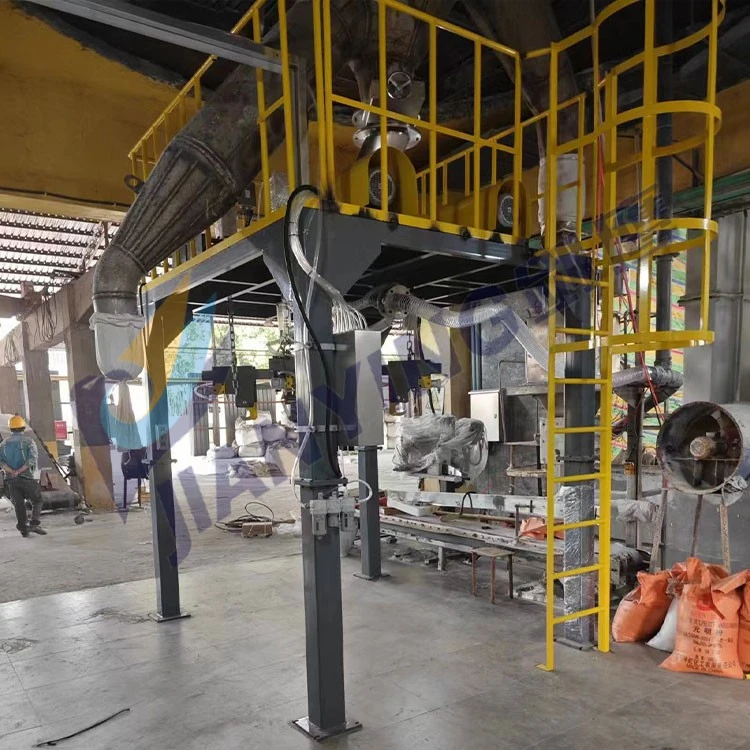
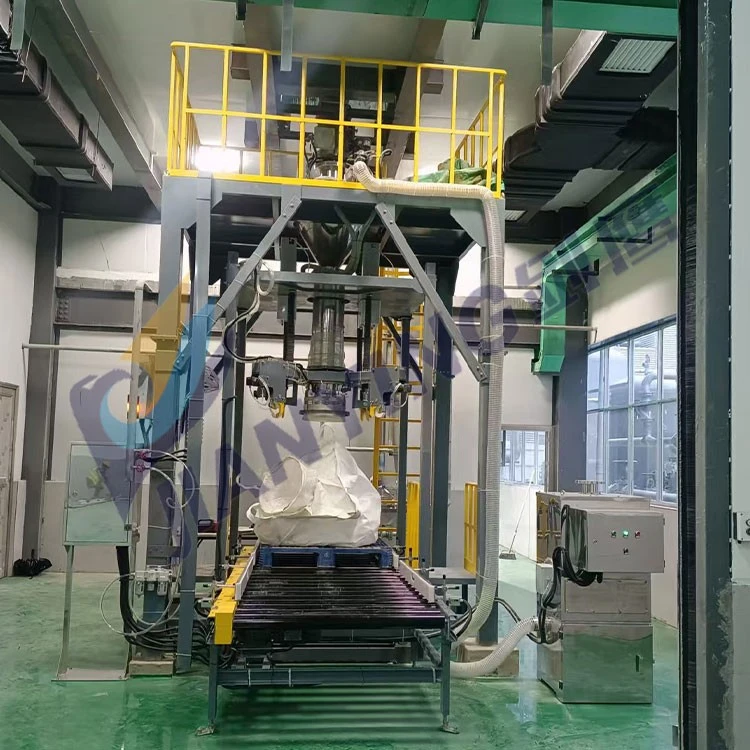
Now, let's get real about downsides. Semi-auto's main flaw is throughput. If you're running 24/7, a semi-auto will max out at like 15 tons an hour, while a fully auto can do 30+. That means more hours, more labor, more wear and tear on your team. And if you're handling dusty or dangerous materials-like chemical powders that can be a hazard if exposed-semi-auto might not have the enclosed transfer systems that fully autos do, which keep dust contained and workers safer. Fully autos are also better for consistent fill density; the vibrators on fully auto machines make sure the material is packed the same every time, so each bag weighs exactly what it's supposed to, no more "light bags" that make customers mad.
Let me share a quick customer story that drives this home. Last year, a company that makes animal feed reached out to us. They started with a small semi-auto Bulk Bag Filling Machine when they had 5 employees. As they grew to 25 employees, they were struggling to keep up with orders-their team was working 10-hour days just to fill bags, and they were losing money on overfilled bags because of human error. We upgraded them to a Jumbo Bag Filling Machine fully auto line, and within 3 months, their labor costs dropped by 40%, their throughput doubled, and they had zero weight complaints. They now run two shifts with just 2 people overseeing the line.
But don't let that story make you think fully auto is always the answer. Another customer, a small coffee roaster that fills jumbo bags of green coffee beans for export, told me semi-auto is perfect for them. They only fill 8 tons a week, and switching between different bean origins (Colombia, Ethiopia, Brazil) is super easy with their semi-auto. They don't need the speed of fully auto, and the smaller footprint lets them keep the machine right next to their roasting area, no need for a separate large warehouse.
So, to wrap up the key differences, let's list them out quick so it's easy to reference:
- Operation: Semi-auto needs manual bag loading/unloading/closing; fully auto does all steps automatically.
- Speed/Throughput: Semi = ~10-15 tons/hour; Fully = ~25-40 tons/hour.
- Labor: Semi = 1 dedicated operator; Fully = 1 operator for multiple machines.
- Accuracy: Fully auto has ±0.5kg precision; Semi is ±1-2kg (good enough for small runs).
- Cost: Semi = $20k-$50k; Fully = $60k-$120k (plus installation).
- Best For: Semi = small businesses, tight spaces, low-volume runs; Fully = mid/large businesses, high-volume, 24/7 operations, hazardous/dusty materials.
Wait, one more thing I should mention: maintenance. Semi-autos have way fewer moving parts, so if something breaks, it's usually a simple fix-like replacing a belt or a sensor. Fully autos have PLC controls, servo motors, and conveyor systems, so you might need a trained tech for repairs, but modern machines have remote diagnostics, so we can usually fix issues over the phone in 10 minutes.
If you're still trying to figure out which one is right for you, here's my advice: first, calculate your weekly/Monthly tonnage. If you're under 20 tons a week, semi-auto is probably your guy. Over 40 tons a week, go fully auto. If you handle materials that are dusty or require strict safety standards, fully auto's enclosed system is worth the extra cost. If your space is limited, semi-auto is smaller and easier to fit.
At the end of the day, both semi-automatic and fully automatic bulk bag filling machines are designed to make your life easier-no more manual labor scooping heavy bags, no more wasting product, no more overtime costs. It all comes down to your business size, volume, budget, and space.
If you're ready to talk through your specific needs, or want to check out our current line of bulk bag filling machines (including both semi and fully auto options), feel free to reach out for a chat. We're here to help you find the right machine for your operation, no pressure, no sales hype.