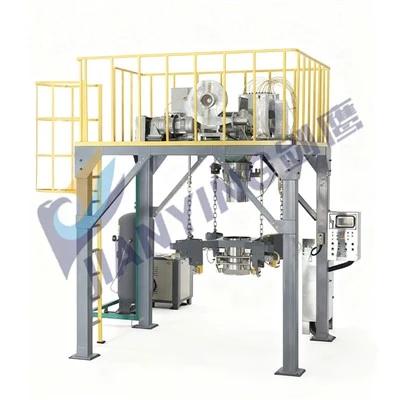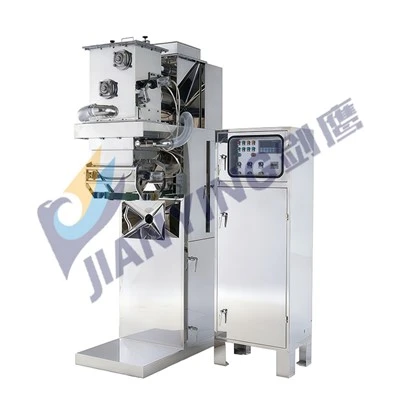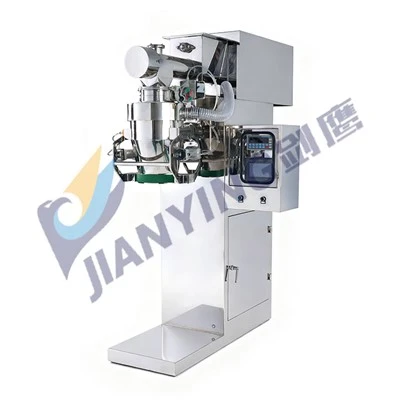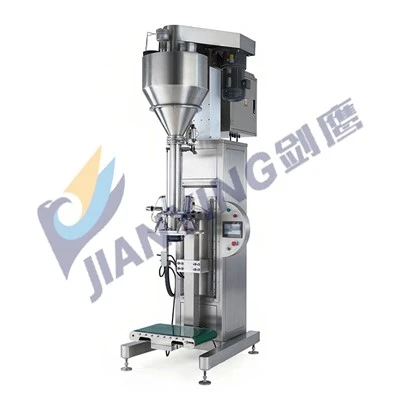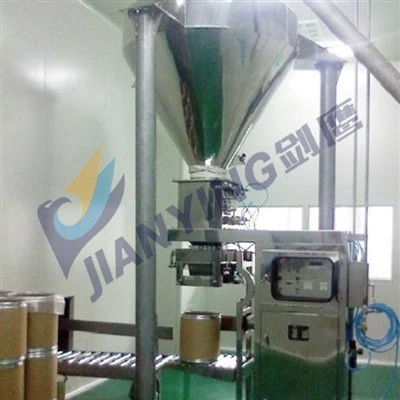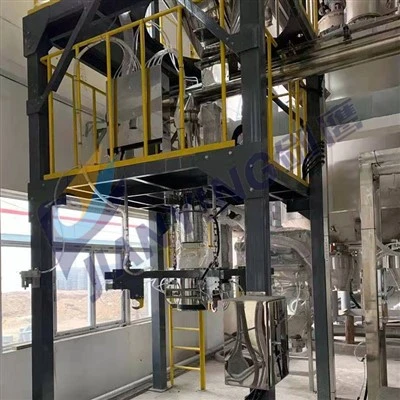
1. Linear Quantitative Scale Packaging Machines (Single-head / Dual-head)
Utilizes a two-stage (fast and slow) feeding method for stable weighing; suitable for granular materials such as rice, animal feed, fertilizer, and plastic pellets. Commonly used for large bags (5–50 kg), offering high precision and low failure rates.
Multi-head Combination Weigher Packaging Machines
Calculates total weight by combining readings from multiple independent weighing hoppers; features high discharge speeds. Suitable for irregularly shaped items like nuts, candies, frozen foods, and small hardware parts; widely used for high-speed small-bag packaging.
Auger Dosing Packaging Machines (Specialized for Powders)
Uses an auger screw to push and discharge material in a sealed manner, preventing dust dispersion; suitable for powdery materials such as flour, starch, seasonings, medicinal powders, and chemical powders.
Volumetric Dosing Packaging Machines
Uses fixed-volume cups for dosing; offers low costs and high speeds. Precision is slightly lower than weighing-based systems; commonly used for the rough quantitative packaging of small granules.
2. Classification by Bag Type and Packaging Format
Vertical Form-Fill-Seal (VFFS) Machines
Uses a roll of plastic film to form, fill, seal, and cut bags on-site. Capable of producing three-side seal, four-side seal, and back-seal bags; offers low packaging costs and is suitable for high-volume production of small packages.
Pre-made Bag Packaging Machines
Uses finished, pre-made bags (e.g., stand-up pouches, zipper bags, vacuum bags, spout pouches). Robotic arms handle bag feeding, opening, filling, and sealing; offers diverse and premium packaging styles.
Open-mouth Large Bag Packaging Machines
Features manual or automatic bag clamping; typically used for woven bags or kraft paper bags. Handles 5–100 kg of material, with sealing performed by a bag-sewing machine.
Tonne Bag (FIBC) Packaging Machines
Designed for bulk bags (FIBCs) with a capacity range of 500–2,000 kg; used for packaging bulk materials such as ores, grains, and chemical raw materials.
3. Classification by Level of Automation
Semi-automatic weighing and packaging machine
Requires manual bag placement and removal; the equipment automatically handles weighing, discharging, bag clamping, and sealing. It is low-cost and suitable for small and medium-sized processing plants.
Fully automatic weighing and packaging machine
The entire process-from bag retrieval, opening, and filling to sealing and conveying-is automated. It can integrate with downstream production lines for inkjet coding, inspection, and palletizing, enabling low-staff or unmanned production.
4. Classification by Material Form
Granular material weighing and packaging machines: For grains, mixed grains, melon seeds, plastic pellets, seeds, etc.
Powder material weighing and packaging machines: For flour, milk powder, additives, chemical powders, etc.
Block/irregular material packaging machines: For quick-frozen foods, fruits and vegetables, hardware accessories, puffed snacks, etc.; typically paired with multi-head combination weighers.
Viscous material packaging machines: For sauces and pastes; typically paired with piston-based metering and weighing systems.